
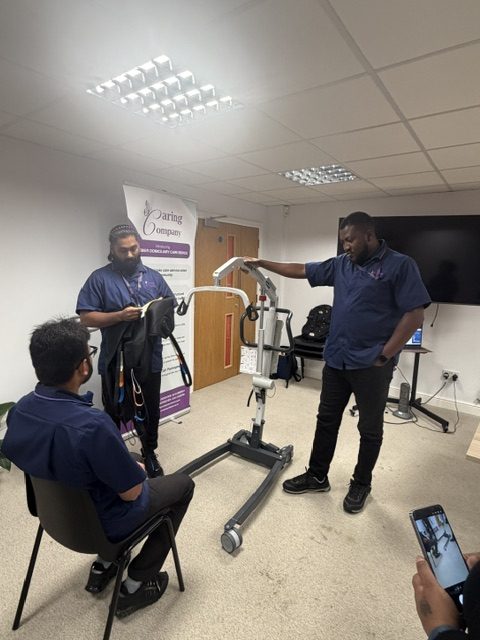
On 21 October 2026 we delivered Moving and Handling of People training to the care team at The Caring Company in Rutland, a domiciliary care provider supporting people in their own homes. It was a busy, hands-on day, and the team covered every piece of equipment their carers are likely to meet on a call.
Why home care teams need practical training
Moving and handling in someone’s home is very different from a care home. Rooms are smaller, furniture gets in the way, and carers often arrive alone or in pairs without a senior on hand. Equipment varies from house to house, and the person being supported may be having a better or worse day than last time.
That’s why we keep our training practical. Carers learn by doing it, on real equipment, with time to ask about the awkward situations they actually come across.
Hoists and slings
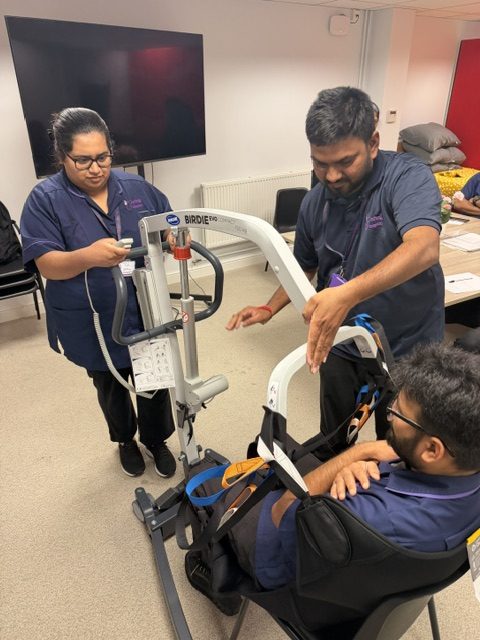
The team worked with the hoist: checking it before use, choosing and fitting the right sling, and talking the person through every stage so they feel safe and in control. Sitting in the sling yourself is one of the best ways to understand what a hoist transfer feels like from the other side. For the legal side of keeping hoists and slings safe, see our guide to LOLER hoist and sling checks.
Stand aids and sit-to-stand
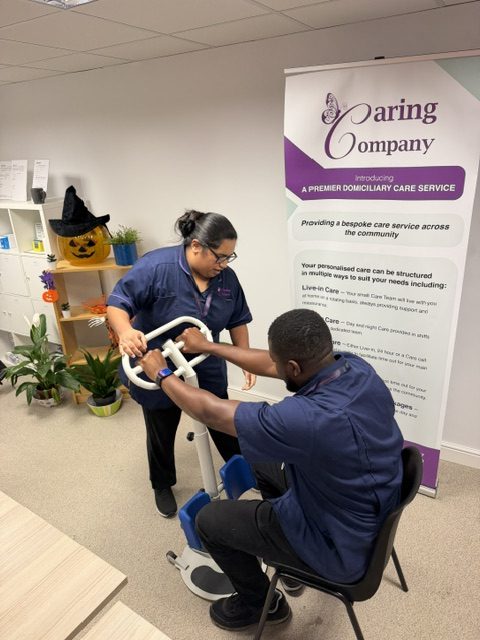
The stand aid is used for people who can bear some weight but need support to get up and turn. The group practised positioning, foot placement and giving clear prompts, so the person does as much as they can for themselves.
Slide sheets and repositioning in bed
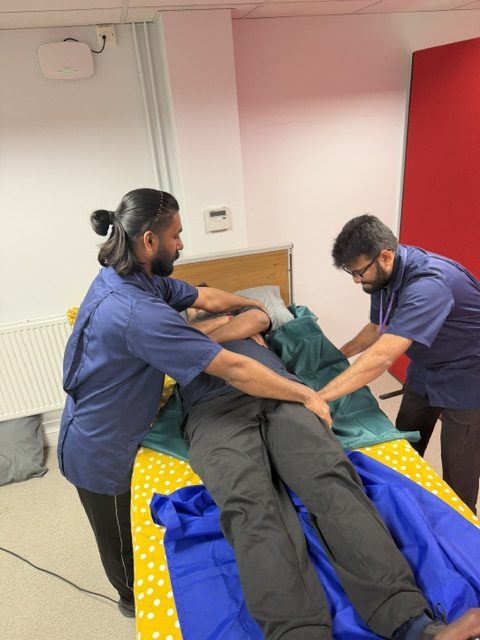
Repositioning someone in bed is one of the most common tasks on a home care call, and one of the easiest ways to hurt your back if it’s done badly. The team practised inserting and removing slide sheets, rolling and moving up the bed, working together with clear communication and keeping the person comfortable throughout.
Walking aids and getting up from a chair
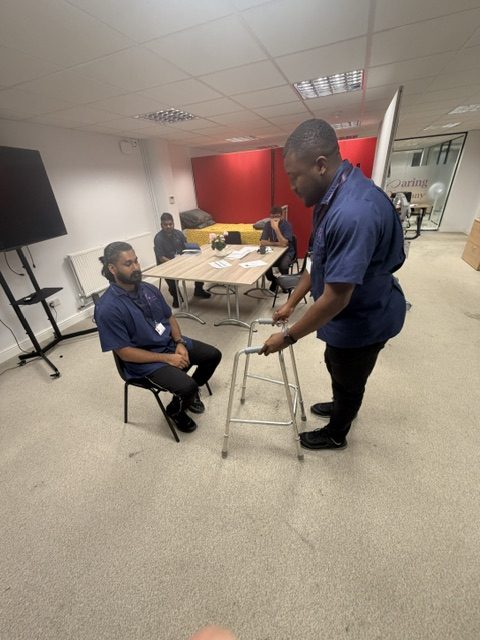
The team also practised with walking frames and helping someone stand from a chair, covering how to encourage independence safely, when to step in and when to stop.
The key message: assess first, every time
Running through all of it was one simple habit: assess before you move anyone. Check the person, the task, the environment and the equipment, and if something has changed since the last visit, stop and report it. That habit protects the person being supported and keeps carers safe over a long career.
Moving and handling training in Rutland and the East Midlands
We deliver on-site moving and handling training for care homes and home care providers across Rutland, Leicestershire, Lincolnshire and the wider East Midlands, as well as Nottingham, Yorkshire and across the UK. We bring the equipment, including hoists, slings, stand aids and slide sheets, so your team can train even if you don’t have a full set on site.
Frequently asked questions
Can you train our carers at our own office?
Yes. We deliver at your premises, so your team trains together without travelling.
Do you bring the equipment?
Yes. We bring hoists, slings, stand aids, slide sheets and walking aids, so carers practise on the kind of equipment they use day to day.
Is the training suitable for domiciliary care?
Absolutely. We tailor scenarios to the settings your staff actually work in, including small rooms and lone or double-up calls in people’s homes.
Book moving and handling training
Tell us how many carers you’d like to train and roughly when, and we’ll come back with a quote. Call 0800 644 6569 or send us an enquiry.
Keep your team’s moving & handling skills sharp between sessions
Ready-to-teach refresher packs and observation checklists from our sister company Care Ready Solutions. Editable PowerPoint slides, trainer notes, learner workbooks and certificates, ready to download.
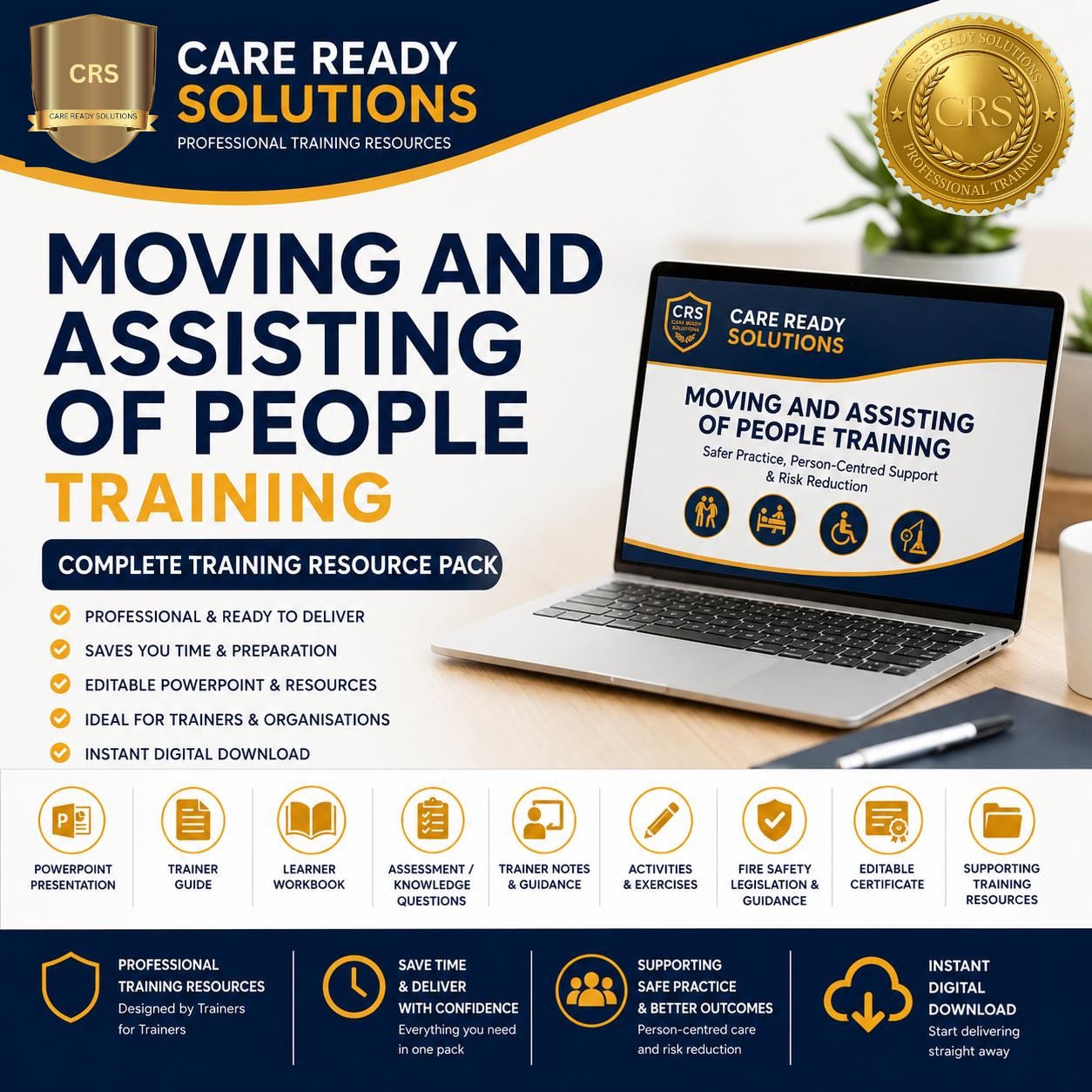 Moving and Assisting People Training Pack
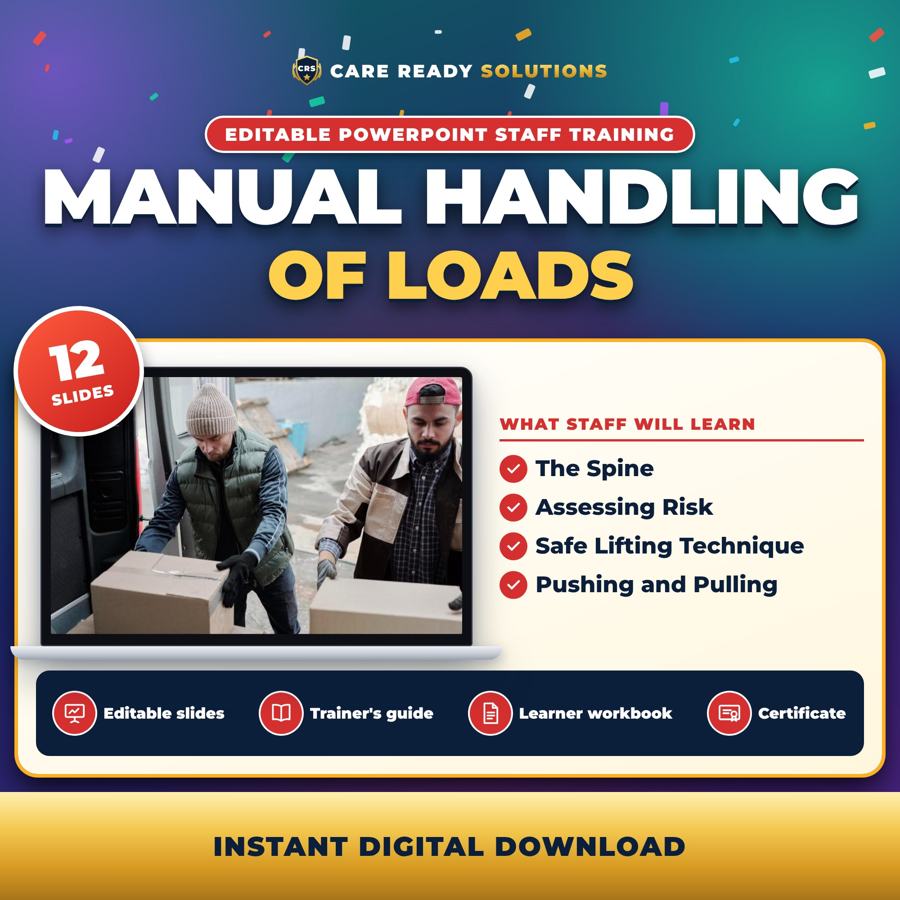 Manual Handling of Loads Training Course
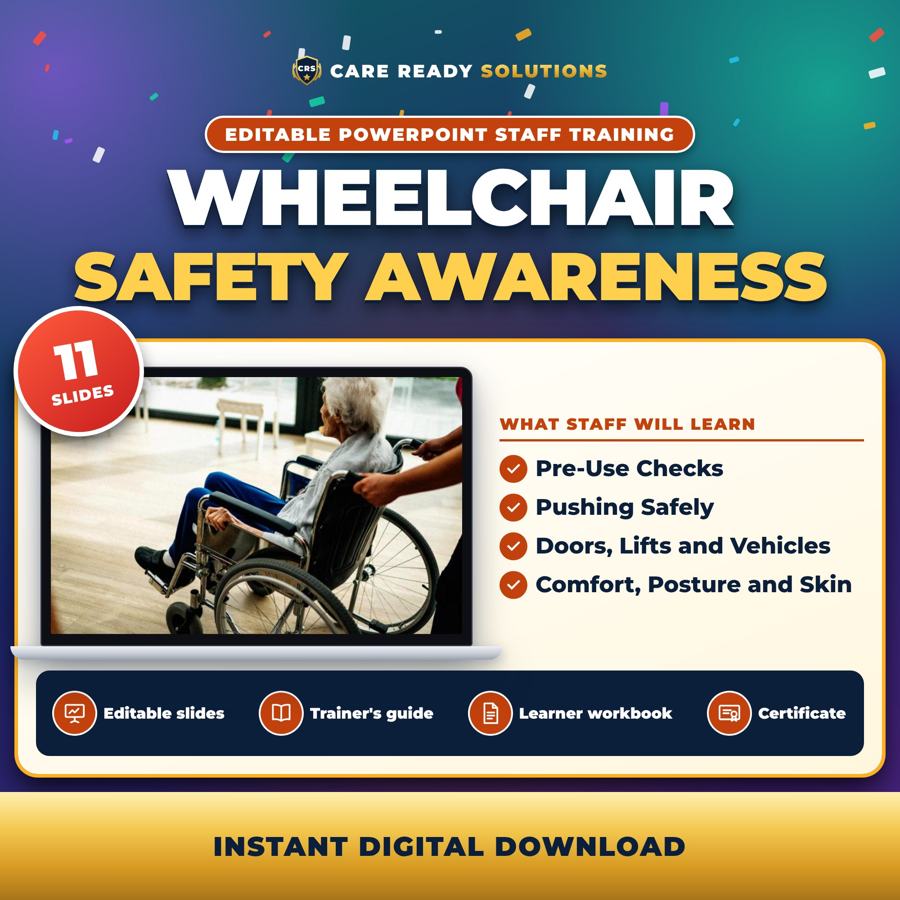 Wheelchair Safety Awareness Training Course
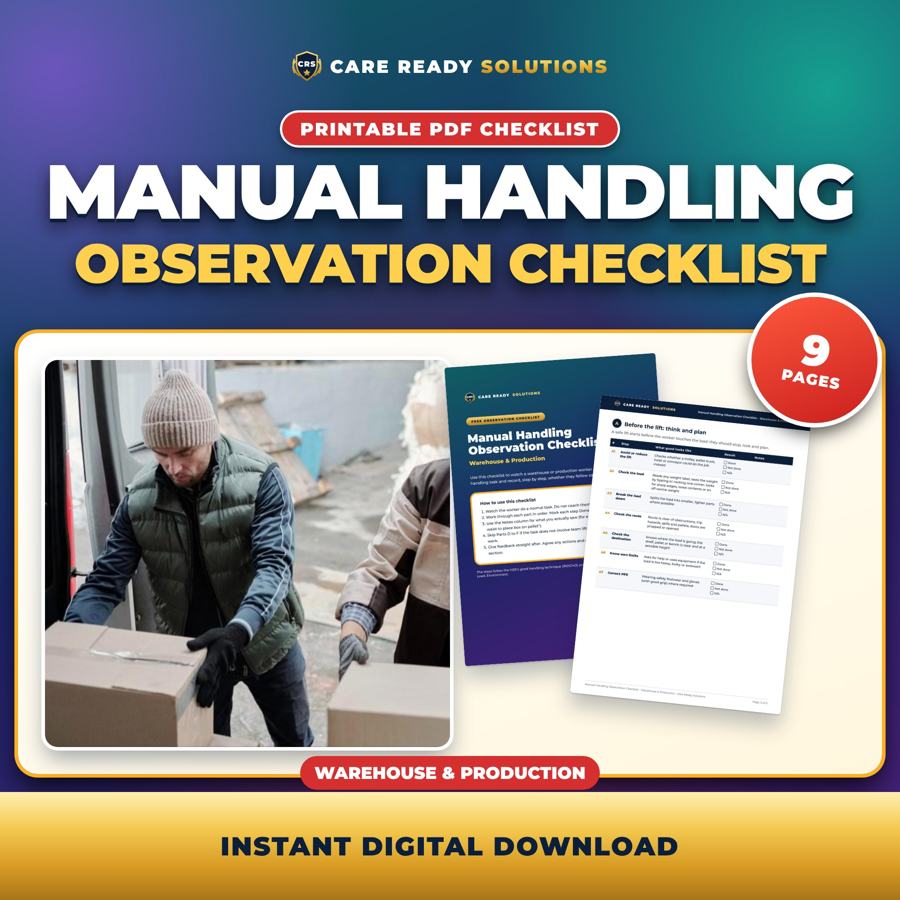 Manual Handling Observation Checklist


