

LOLER Checks for Hoists and Slings: What Care Managers Need to Know
If your service uses hoists and slings, LOLER applies to you. The Lifting Operations and Lifting Equipment Regulations 1998 set out how lifting equipment must be selected, used, checked and recorded, and in health and social care that includes the equipment used to lift people.
With hoist and sling safety firmly in the spotlight after the latest MHRA national patient safety alert on hoists and slings, now is a good time to check that your LOLER arrangements are as solid as they should be.
Thorough examinations: every six months
HSE guidance for health and social care is clear that equipment used for lifting people, including mobile hoists, ceiling track hoists and the slings used with them, should have a thorough examination at least every six months, or in line with a written examination scheme drawn up by a competent person.
A few points that often trip services up:
- Slings count. Slings are lifting accessories and need their own thorough examination, not just the hoist. Each sling should be individually identifiable so it can be tracked.
- It must be a competent person. The examiner needs the practical and theoretical knowledge to spot defects. HSE advises that the person doing routine maintenance generally shouldn’t be the same person carrying out the thorough examination.
- Reports matter. Each examination should produce a written report. If a defect poses an immediate risk of serious injury, the equipment must not be used until it’s put right.
Between examinations: everyday checks
A six-monthly examination doesn’t replace the checks staff should carry out every time they use a hoist or sling. Good practice is for staff to check, before each use:
- The sling label is present and readable, and the sling is the right type and size for the person
- There’s no fraying, tears, holes, stretched or broken stitching, or damage to loops, clips or straps
- The hoist’s battery, brakes, emergency lowering and controls work as they should
- The sling and hoist are compatible, and the hoist’s safe working load is suitable for the person
Anything that doesn’t look right should be taken out of use, labelled and reported. Staff need to feel confident doing that, even when it’s inconvenient.
Where training fits in
Most hoist and sling incidents aren’t caused by equipment failure alone. They involve the wrong sling, a sling fitted incorrectly, or a check that was rushed or skipped. That’s why our moving and handling training spends real time on sling selection, fitting and pre-use checks, using hoists and slings either brought by us or from your own service.
For more on the wider picture, see Manual Handling Injuries in Care: What the Latest HSE Figures Show and common moving and handling mistakes in care settings.
A quick LOLER checklist for managers
- Do you have an up-to-date list of every hoist and sling in the service?
- Has each one had a thorough examination within the last six months, and can you find the report?
- Are slings individually labelled and matched to the people who use them?
- Do staff know how to carry out and record pre-use checks?
- Is there a clear process for taking damaged equipment out of use?
- Has every member of staff who uses a hoist had practical training, and is it up to date?
Need training for your team?
We deliver hands-on moving and handling training at your premises, with hoist and sling checks built in. We cover Doncaster, Leeds, York, Nottingham and beyond. Get in touch to book a session.
This article is general guidance. Always check the current HSE guidance and your equipment manufacturer’s instructions.
Keep your team’s moving & handling skills sharp between sessions
Ready-to-teach refresher packs and observation checklists from our sister company Care Ready Solutions. Editable PowerPoint slides, trainer notes, learner workbooks and certificates, ready to download.
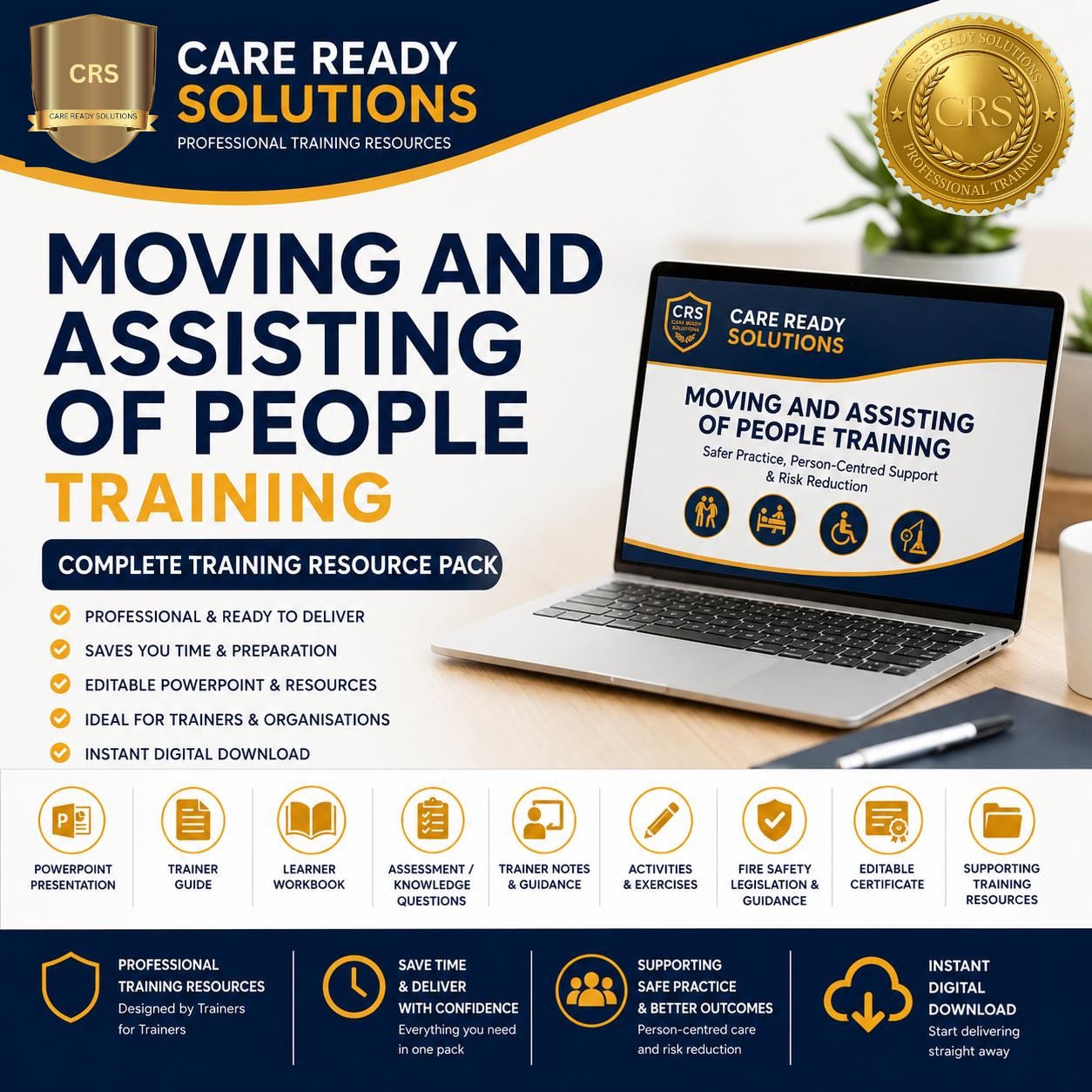 Moving and Assisting People Training Pack
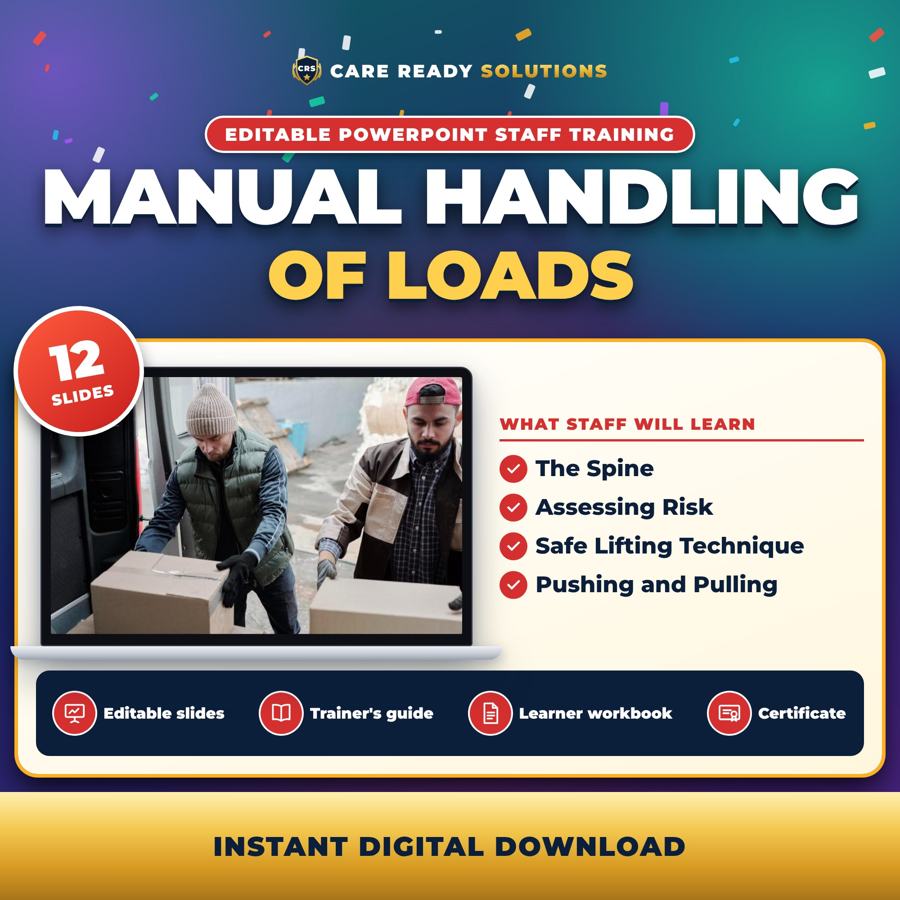 Manual Handling of Loads Training Course
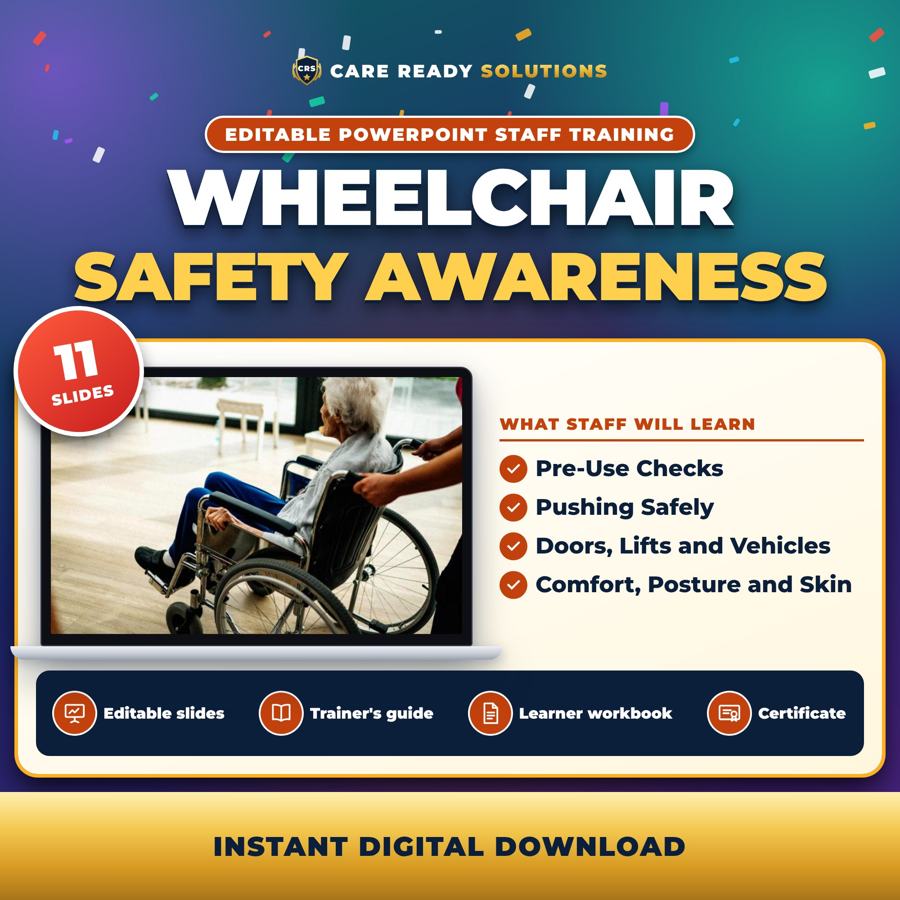 Wheelchair Safety Awareness Training Course
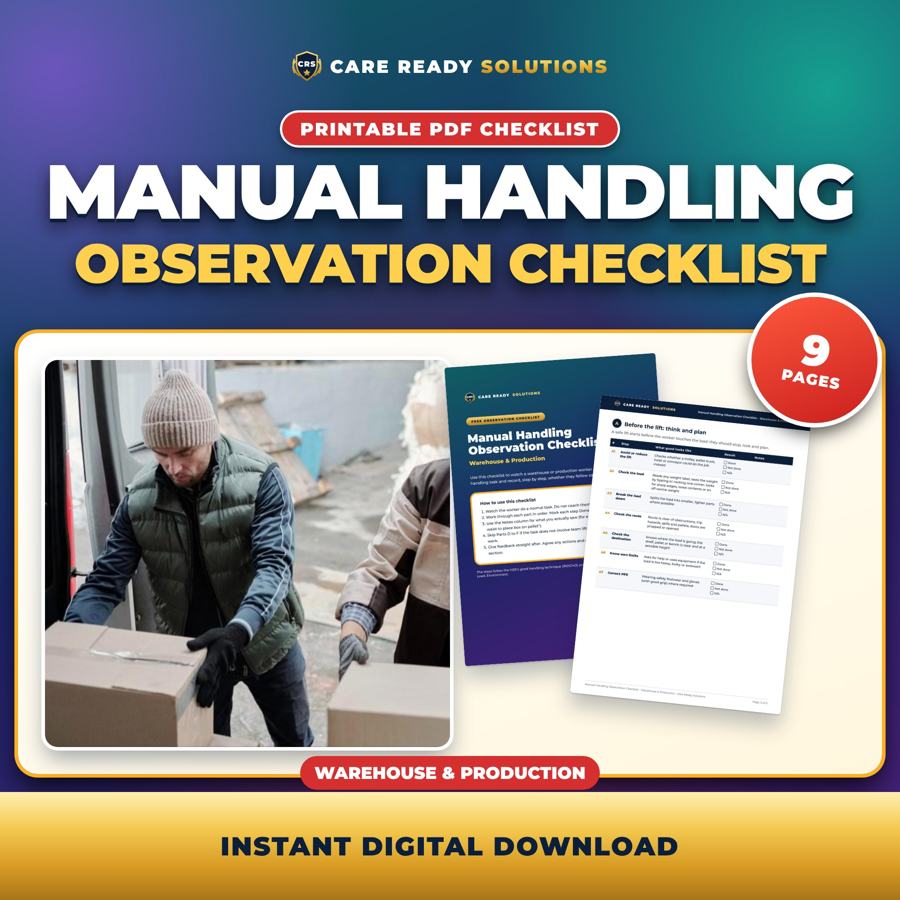 Manual Handling Observation Checklist


