
When someone falls, the instinct to help them straight back up is strong. It feels kind, and nobody wants to leave a person on the floor. But lifting a fallen person by hand is one of the riskiest things a carer can do, both for the person who has fallen and for the staff involved.
This post looks at why the moments after a fall need a calm, planned response, and how good moving and handling training helps care teams get it right.
Why you shouldn’t just lift
A person on the floor is a dead weight at the lowest possible point. Lifting them manually puts huge strain on a carer’s back, shoulders and knees, and it gives you no chance to check whether the person is injured before they’re moved. Moving someone too quickly can make an injury worse.
That’s why most care providers have a post-falls procedure, and why manual lifting from the floor is generally avoided in favour of equipment. Always follow your own organisation’s policy and the person’s moving and handling plan.
A calm sequence after a fall
- Stop and reassure. Stay with the person, speak calmly and tell them not to try to get up straight away.
- Check for injury. Follow your service’s procedure for checking the person and, if there are signs of injury or you have any doubt, get medical help before moving them.
- Make them comfortable. If the person can’t be moved yet, keep them warm and protect their dignity while you wait.
- Decide how they’ll get up. Some people can get up with guidance and a chair for support. Others will need a hoist or other equipment designed for getting someone up from the floor.
- Record and review. Report the fall in line with your procedures and review the person’s risk assessment and moving and handling plan.
Why practice matters
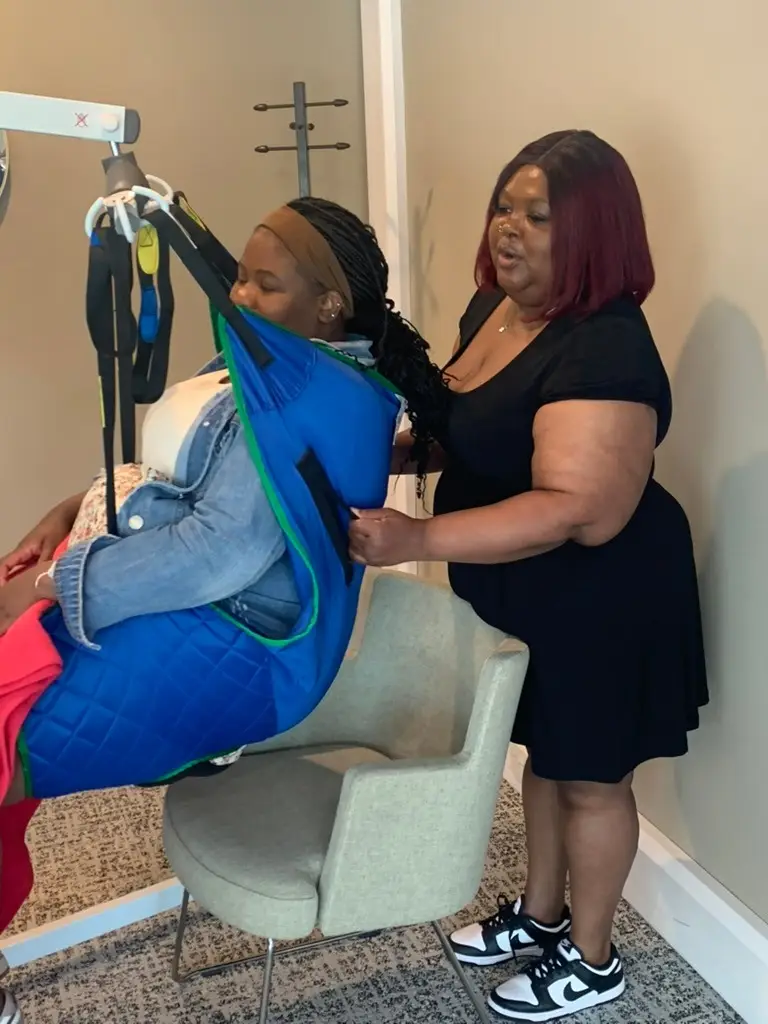
Getting someone up from the floor with a hoist is a skill that staff may use only occasionally, which is exactly why it needs practising. Fitting a sling around someone lying on the floor, positioning the hoist and controlling the lift calmly are much harder in a real emergency if the team has only ever read about it.
Communication matters too. A fall is frightening, and a person who understands what is happening is likely to feel safer. Explaining each step, asking permission and moving at their pace all help to protect their dignity.
Learning from every fall
Once the person is safe, take time to think about why the fall happened. Was the person trying to reach something, get to the toilet quickly or stand up without support? Were they wearing suitable footwear, and was the room well lit and free of trip hazards? The answers often point to small, practical changes that make another fall less likely, and they should feed back into the person’s care plan and moving and handling plan.
How we cover falls in training
Supporting someone who has fallen is part of our moving and handling training. Sessions are hands-on and delivered at your premises, last around three hours and take up to 12 staff. We bring our own LOLER and PUWER compliant, PAT tested training equipment, including hoists, slings and slide sheets, so your team can practise properly.
If you’ve had a fall recently, it’s also worth checking the basics around your hoists and slings. Our posts on LOLER checks for hoists and slings and the MHRA hoist and sling alert are good places to start.
Very detailed information but very well delivered, interactive and inclusive.
Jade Burnett, Google review
To arrange training for your team, get in touch or see where we work on our Coverage page.
Keep your team’s moving & handling skills sharp between sessions
Ready-to-teach refresher packs and observation checklists from our sister company Care Ready Solutions. Editable PowerPoint slides, trainer notes, learner workbooks and certificates, ready to download.
 Moving and Assisting People Training Pack
 Manual Handling of Loads Training Course
 Wheelchair Safety Awareness Training Course
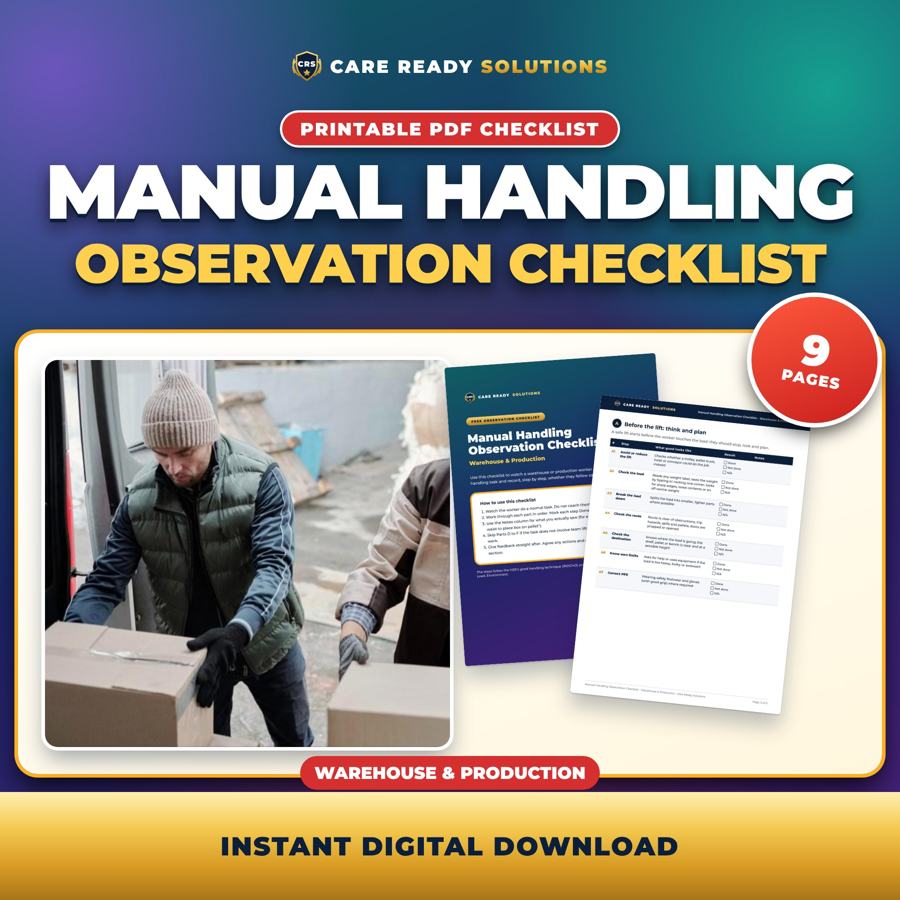 Manual Handling Observation Checklist


